
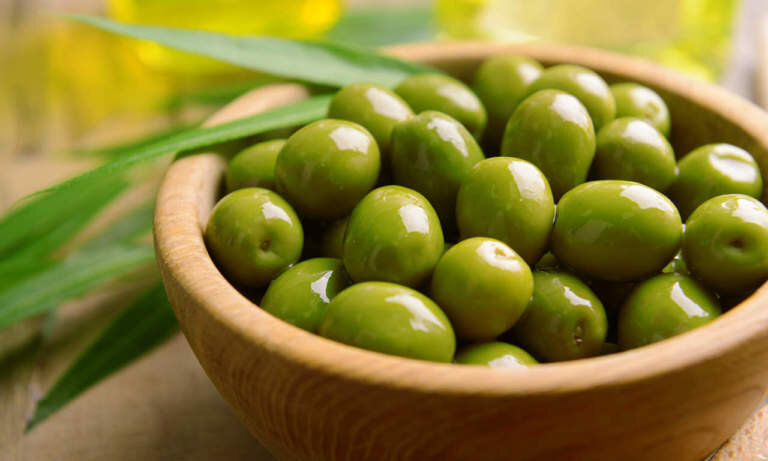
Autumn is the season when olives are harvested! But when exactly should they be picked? The timing of the harvest is crucial both for olives destined to produce oil and for those that will become the stars of our tables, that is, table olives. Generally, the harvest period goes from October to the end of December. In the case of table olives, the fruit must be large and rich in pulp, while to obtain oil with excellent organoleptic qualities, the fruit must not be overly ripe. We have already addressed the topic of extra virgin olive oil production in a previous article on our blog, so in this space we will focus on table olives, which perhaps are not talked about enough, despite their frequent consumption. Let's start with one of the areas most suited to their production: Parteolla. "The origin of the toponym Parteolla is uncertain. Some scholars attribute its meaning to the Nuragic period, but certainly the most accredited theory leads to a Latin origin, Pars Olea, the name by which the Romans would have called the area in question, to emphasize the widespread cultivation of olive trees.” In the Parteolla area, the varieties of olives grown have now decreased compared to the past. Essentially today they are reduced to “Sa Bianca”, also known as Pitz'e Carroga, and “Sa Tunda”, the so-called Tonda di Cagliari. There are also two other varieties that we can define as minor: “S’olieddu” or Bosana, and “S’olia de Paschixedda”. The Tonda di Cagliari, from which a medium-light fruity oil can be obtained with aromas of ripe fruit, apple, berries, a slightly bitter taste and high sweetness, is also suitable for the production of table olives, that is, those we call olives in brine, which become the stars of both appetizers and many traditional dishes.
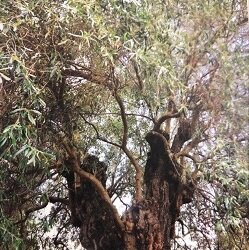
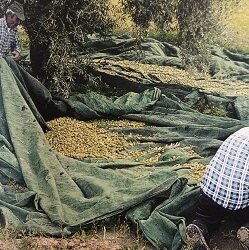
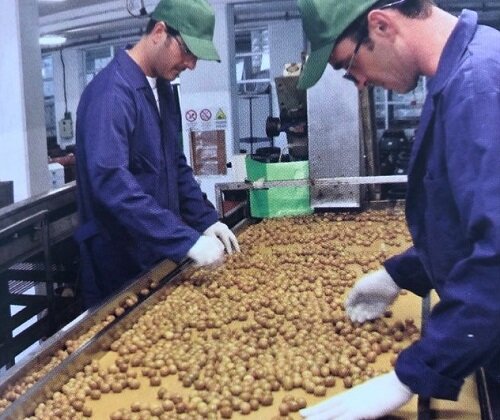
But how are table olives produced? If you intend to make them at home, it will be enough to select olives of good size, preferably without defects, wash them and then immerse them in brine (a solution of water and salt) where they will remain for a few months, until they reach the right consistency. If, on the other hand, they are produced by one of the most important food companies in Parteolla, specifically Copar (Cooperative of olive growers of Parteolla based in Dolianova), things become more complex. Once harvested and placed in ventilated crates of about 20 kg (so as not to crush them and allow them to breathe), the contributing members bring the olives to the production plant, where they are weighed and analyzed. To be considered suitable, the olives must be free from the following defects: At the time of unloading, a random sample of about 1 kg is taken on which qualitative and defect evaluations will be carried out (olive batches with defects up to 5% will be considered FIRST CHOICE, olives with defects between 5% and 10% will be SECOND CHOICE. If defects exceed 10%, the olives will not be accepted). After passing the initial selection, the olives are emptied into a grader called a “preliminary” grader, because it performs a first and rough sorting. In fact, through this machine, leaves and very small olives (e.g., size 6) unsuitable for table olive production but which can instead be used for oil production are discarded. Those with the correct size are instead sent for table olive production, then poured into large silos where they will stay in brine for some time, from 8 to 12 months depending on the cultivar used. The brine solution in which the olives are immersed contains a variable percentage of salt (usually around 5 or 6%) and remains the same for the entire fermentation period, although it must be constantly monitored and possibly corrected if necessary. During the fermentation and preservation process, checks are carried out to assess the correct progress. These are based on measuring the percentage of salt in the brine, the pH, and the free acidity; these analyses, carried out every two weeks, are aimed at improving the qualitative aspect of the product and avoiding alterations. Visual checks and tastings are also carried out on the olives. When the olives are ready, having completed their ripening cycle in the large silos, they are conveyed to the packaging department. The brine used for packaging and found inside the jars or bags does not come from the silos but is newly prepared. The salt used comes exclusively from Sardinia. Once they arrive at the packaging department, the olives are sorted by size by a special machine and packaged based on this parameter. In addition to mechanical selection, there is also a manual selection: the olives pass on a conveyor belt and operators are tasked with removing olives that are too wrinkled or with obvious defects.
The olives are now ready to reach our tables, through organized distribution channels or specialized stores. If accompanied by Sardinian-style sausage, Sardinian pecorino (more or less aged), bread and a glass of red wine, they make up the most typical of appetizers (even though, between us, despite being excellent and delicious, they are impossible to pair with wine because of their saltiness!!!).
.png "10 cibi sardi da assaggiare assolutamente a Cagliari")
.png "10 Sardinian Foods You Must Try in Cagliari")
.jpeg "San Benedetto Market Cagliari: The Complete Guide to Sardinia's Most Authentic Food Experience (2026)")