
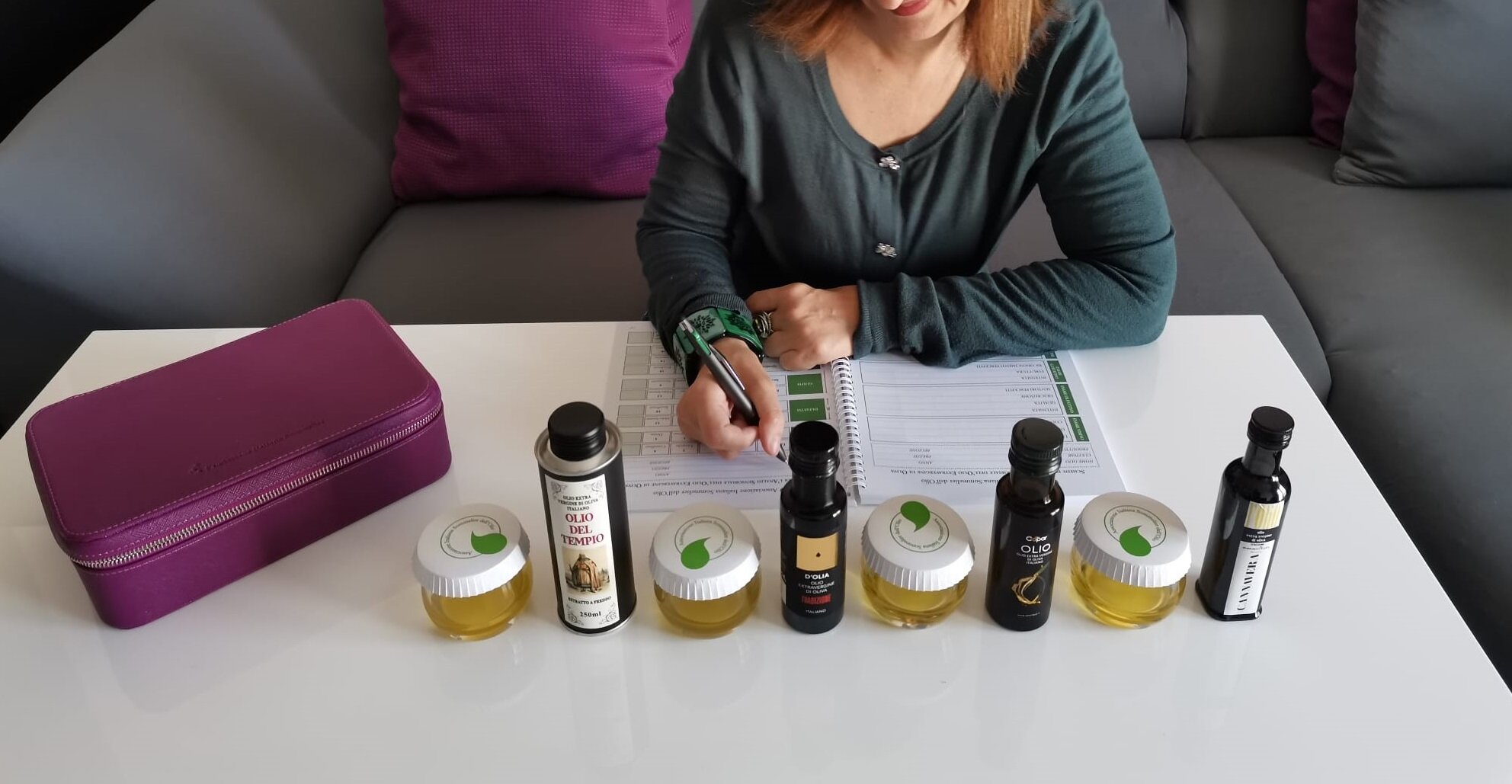
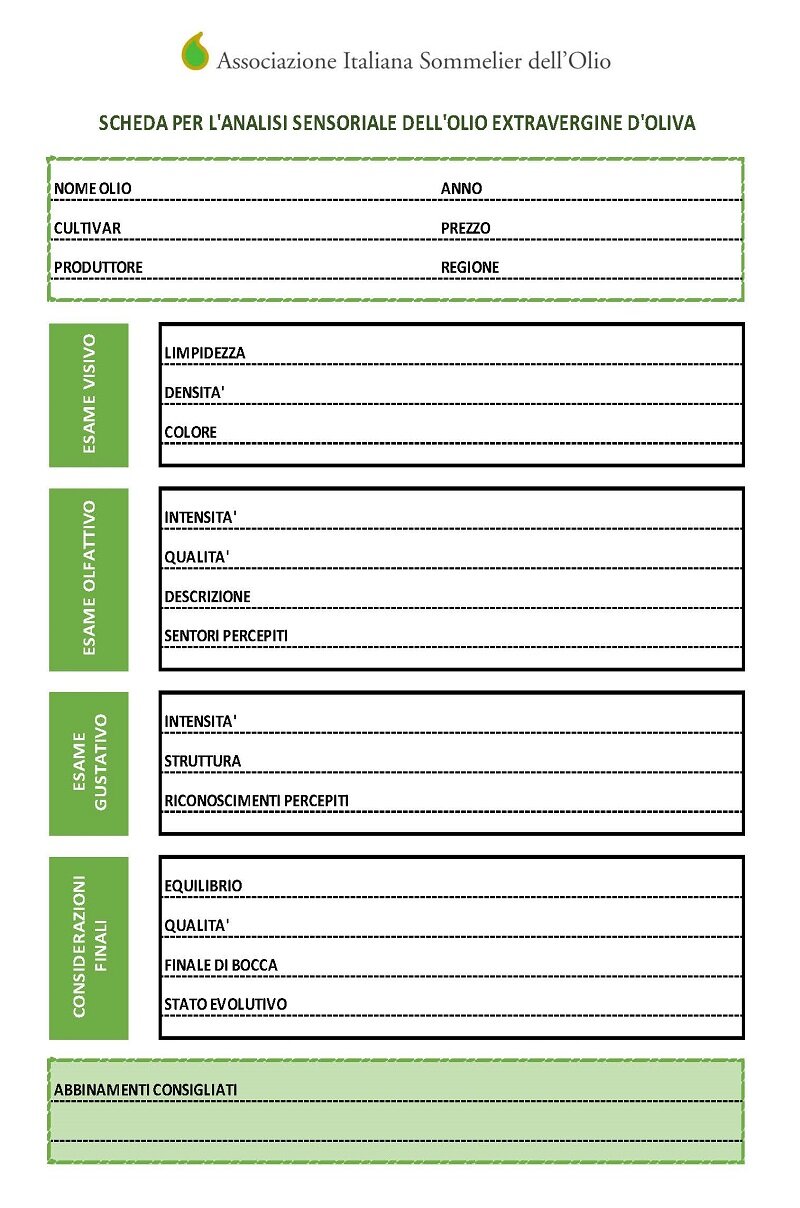
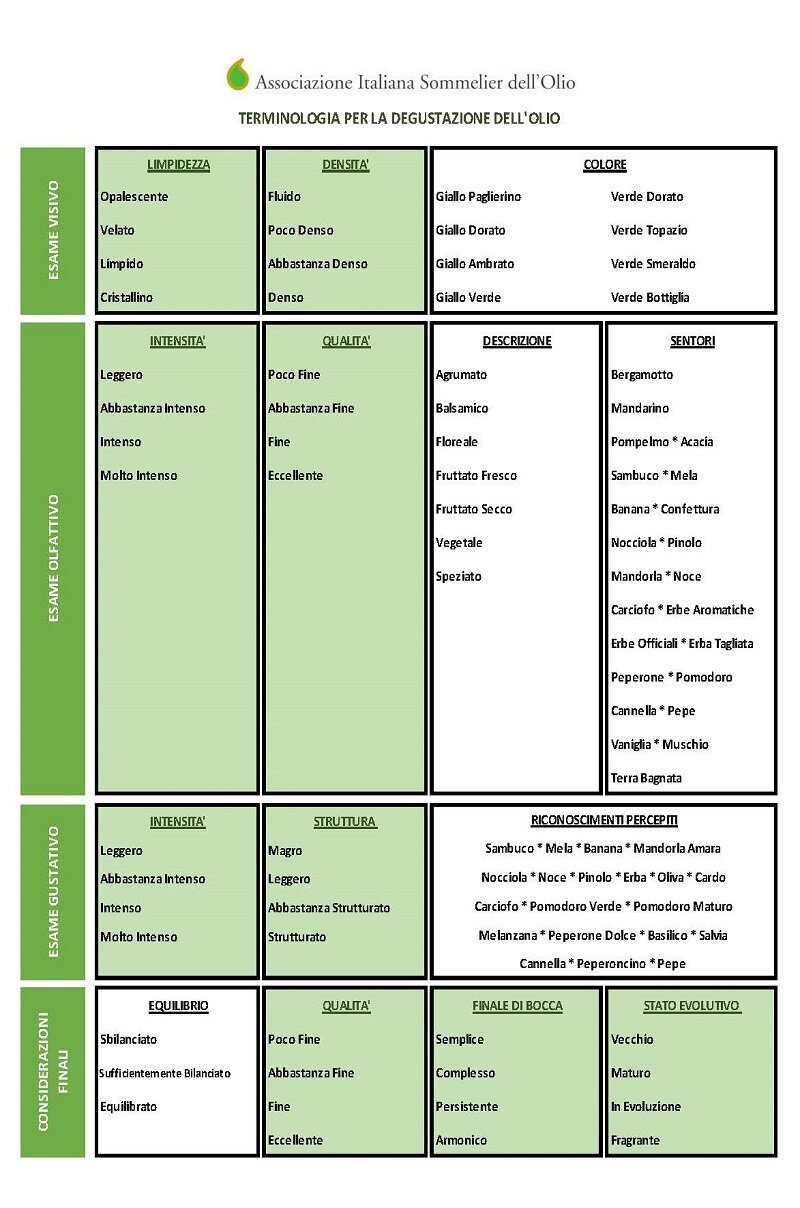
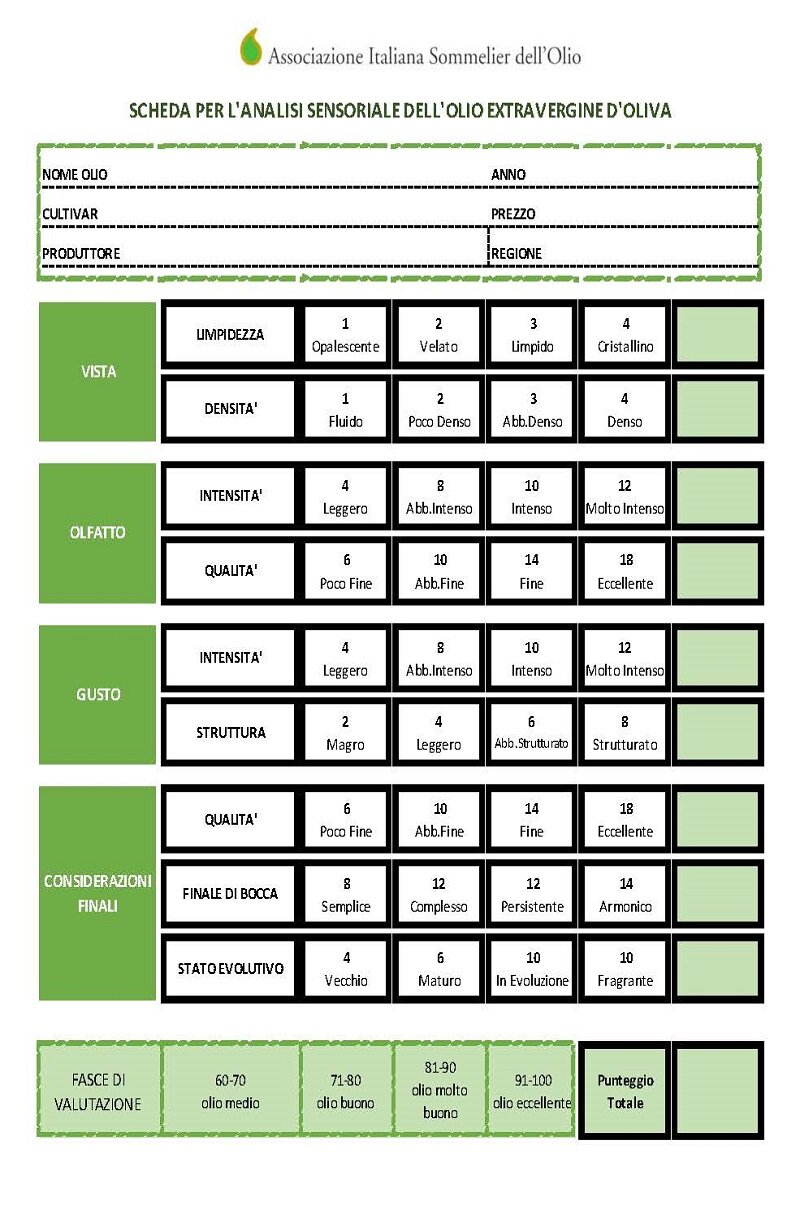
When it comes to oil, we are often distracted consumers, influenced by various elements such as packaging and color, price or territorial connection, and so we tend to choose one product over another without actually having the slightest idea of the organoleptic characteristics of the product we are buying. With this article, I would like to provide you with tools to learn how to understand the main characteristics of oil so that you can make a more informed choice of a quality product. To this end, I will describe to you step by step the stages for carrying out a sensory analysis of oil. Tasting an oil means learning to know it, tasting it with awareness, linking the sensations perceived to the variety/cultivar of origin, the production philosophy, the seasonal trend, and its evolution. Through sensory analysis, the organoleptic characteristics of the oil perceived by our senses are evaluated. In order for the analysis to be carried out correctly, precise rules must be followed. First of all, the tool to use will be a stemless, transparent glass equipped with a lid that will allow the aromas to be preserved until the olfactory examination is carried out. Regarding the color of the glass to be used, a small clarification is needed: in tasting panels aimed at verifying whether an oil can be classified as quality and belonging to the extra virgin olive oil category, a blue glass is used, since color and, in general, visual appearance are not considered among the quality parameters to be judged (so do not be fooled by the emerald green color of certain oils); whereas oil sommeliers carry out a sensory analysis that also includes the visual examination, hence the use of a transparent glass. The glass, with a small amount of oil inside, should be brought to eye level to begin the visual examination. VISUAL ANALYSIS During the visual examination, the parameters to be considered are its CLARITY (thus the absence of suspended particles and the ability to let light pass through), its DENSITY, and finally its COLOR, which can be in the yellow chromatic scale with all its shades (straw yellow, golden yellow, amber yellow, greenish yellow) or in the green scale (golden green, topaz green, emerald green, bottle green). It is important to emphasize that the visual appearance of the oil should in no way influence the quality judgment that will be expressed later (as happens in tasting panels), but in the world of sommeliers, this phase is carried out for descriptive and reporting purposes only. OLFACTORY ANALYSIS Once the visual examination is complete, we move on to the olfactory one, considered the most difficult as we are no longer used to sniffing and smelling; yet it is a fundamental investigation that allows us to identify the presence of various defects such as Dregs, Winey, Heated, Moldy, Rancid, and others, which can be caused by processing systems, the time of harvest, or climatic trends. Before smelling the oil, it will be necessary to bring it to the correct temperature and for this purpose we should slightly warm the glass with our hands, rubbing the bottom for a few seconds. Once this operation is done, the lid must be removed from the glass (present from the moment we poured the oil until just before the olfactory examination) and begin to take several deep inhalations. During this phase, we must assign a value to the INTENSITY and OLFACTORY QUALITY of the oil and then move on to the description of the AROMAS, which should not simply be perceived but also identified. The aromatic families and aromas perceived are numerous, as with wines, and are usually linked to the sensory profiles of the cultivars used (e.g., in an oil based on Bosana olives, it is normal to perceive vegetal notes of thistle and artichoke). MAIN FAMILIES OF AROMAS TASTE-OLFACTORY ANALYSIS After observing and smelling, this third and final phase is completed by tasting a small sip of oil. The sip should be held in the mouth for a few seconds, elegantly "chewed" and then swallowed. This will allow you to evaluate all the taste and tactile components and the retronasal aromas, which complete the taste-olfactory profile. Before swallowing the sip of oil, it is advisable to introduce air into the mouth through an operation called stripping, which allows the oil to be oxygenated, to better perceive its aromatic volatile components. During this phase, we must understand what FLAVORS are perceived in the mouth and the TACTILE and TRIGEMINAL SENSATIONS (e.g., tingling due to spiciness) that the oil causes in the mouth and throat. Through this analysis, we will then be able to express a judgment on its INTENSITY, STRUCTURE, and the RECOGNITIONS PERCEIVED (whether they are the same or different from those identified during the olfactory phase). A great oil, after swallowing, will keep the memory of its taste-olfactory nuances in the oral cavity for many minutes. The more persistent and elegant they are, the more we are dealing with a high-quality oil. The sensory analysis process concludes with final considerations regarding BALANCE, QUALITY, TASTE FINISH, and EVOLUTIONARY STATE. To help you in each of the analysis phases, you can follow the forms attached to this article and used by the Italian Association of Oil Sommeliers. Now all you have to do is try!
.png "10 cibi sardi da assaggiare assolutamente a Cagliari")
.png "10 Sardinian Foods You Must Try in Cagliari")
.jpeg "San Benedetto Market Cagliari: The Complete Guide to Sardinia's Most Authentic Food Experience (2026)")