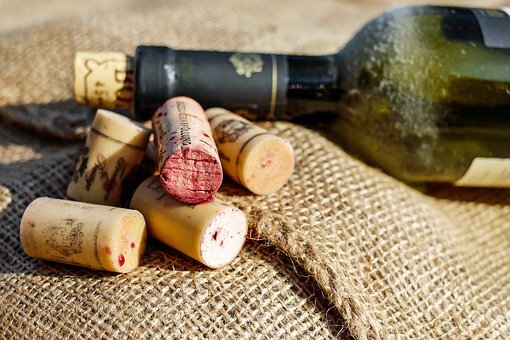
The packaging of a wine bottle is made up of several elements, including the label, the back label, the capsule, and the cork, which is the focus of this article and often the subject of lively discussions among sommeliers. There are various types of corks on the market, but the most commonly used are natural cork; silicone (the famous synthetic cork); glass; and screw cap or screwcap. The type of cork most widely used by Italian wine producers, both for tradition and for the ease of sourcing the raw material, is undoubtedly cork, also because Italy and specifically Sardinia, together with Portugal, are among the world's largest producers of cork. While there are still many prejudices against the screw cap, even though since 2013 (D.L. of September 24, 2013) there is no longer an obligation to use cork for DOCG wines, to facilitate the export of our wines to foreign markets. In fact, in the Anglo-Saxon market (England, Australia, and New Zealand) the screw cap is in high demand and is not seen as indicative of low-quality wines, as it is in our country. The aluminum closure is especially preferred by younger wine lovers and particularly by women, as shown by a survey conducted on a sample of 6,000 consumers in 2015. The screwcap, contrary to what is commonly believed and as demonstrated by several tests, in theory would allow for a slower aging of the wine (since there would be no micro-oxygenation associated with the cork) and consequently, the amount of sulfites used (which also act as preservatives) could be reduced. Reservations remain about the use of screw caps on bottles intended for long aging, even though "Cork Free" whites have proven to hold up admirably. In fact, a parallel tasting with the same wines from a well-known South Tyrolean producer, sealed with both screwcap and cork, showed that after 5 years and more, the evolution of the wine held pleasant surprises precisely thanks to the screw cap closure. Unfortunately, there are still many cultural legacies to overcome, and Italy and Sardinia are still far from seizing this opportunity for growth in sales to foreign markets through a small change in packaging. In the meantime, how can we avoid the risk of the annoying cork taint associated with the use of cork, which often forces us to give up the precious contents of a bottle that has this defect? The problem that research has long been trying to solve is the olfactory deviations that come from cork oaks. Pesticides and herbicides—in short, the use of chemicals in agriculture—have given us this problem. In fact, the responsible molecule, trichloroanisole TCA, is a derivative of trichlorophenol that entered nature starting in the 1960s. From the soil, it then rose into the bark of the trees. The TCA present in the cork contaminates the wine and acts on the nervous centers of those who bring their nose to the glass, inhibiting the perception of odors and creating the well-known and extremely annoying effect. More than a stench, it is the blocking of the sense of smell, but the result is the inability to appreciate the wonderful aromas of the wine. Unfortunately, the soil where cork oaks grow will take many years to get rid of the pesticides, so this is not a problem with an immediate solution, also because the trees produce cork only when they are at least 40 years old. One of the latest innovations in the battle against the horrible cork taint is the Nomacorc Green Line, a new type of cork made from sugar cane. The corks are attractive to look at and soft to the touch. A revolutionary technology promises precise control of the oxygen that penetrates the bottle using only natural products with zero environmental impact. Nomacorc is an industrial giant that alone holds 70% of synthetic closures, has produced 20 billion corks in 15 years, and has long been working on bio technologies. The Green Line includes a "Riserva" type specifically designed for wines with bottle aging of 25 years, thanks to a programmed oxygen permeability that decreases during the first year until it stabilizes at 0.6 mg every 12 months. The search for a solution to the problem is pushing research forward to provide wineries with closures that are increasingly natural and high-performing. This is where DIAM, the French company that revolutionized agglomerated corks—that is, cork particle corks—has focused on technology, challenging the more expensive single-piece corks. About ten years ago, with the Diamant process, it began to remove from cork the 140 molecules that can cause alterations in wine, such as the infamous TCA, or cork taint. More recently, Origine was created, an agglomerated cork made only from natural components. The cork granules are held together only by beeswax and vegetable oil. Another industrial giant, Amorim has instead developed a sort of electronic nose, NDtech®, which detects smelly corks with a gas chromatograph. The certified ones cost about twice as much as single-piece corks, and only premium wines can afford them, but they are becoming a must that the most attentive buyers are beginning to demand insistently from wineries. And you, which side are you on? Are you traditionalists, always and forever on the side of the cork, or are you ready to accept the screw cap even for wines produced in Italy?
Le strade del gusto
Sardinia told through its flavors.
Authentic food and wine experiences to discover the wine, oil, cheeses, craft beer, fresh pasta and the traditions of Sardinia.
Tappo in sughero o tappo a vite? Il grande dilemma!
Tappo in sughero o tappo a vite? Il grande dilemma!
2019-06-06 10:48
2019-06-06 10:48
Redazione
Redazione
screwcap, tricloroanisolo, puzza-di-tappo, tappo-a-vite, nomacorc, diam, amorim,
.png "10 cibi sardi da assaggiare assolutamente a Cagliari")
10 cibi sardi da assaggiare assolutamente a Cagliari
2026-08-19 14:26:24
2026-08-19 14:26:24
Redazione
Redazione
.png "10 Sardinian Foods You Must Try in Cagliari")
10 Sardinian Foods You Must Try in Cagliari
2026-08-04 10:18:00
2026-08-04 10:18:00
Redazione
Redazione
.jpeg "San Benedetto Market Cagliari: The Complete Guide to Sardinia's Most Authentic Food Experience (2026)")
San Benedetto Market Cagliari: The Complete Guide to Sardinia's Most Authentic Food Experience (2026)
2026-07-23 08:59:00
2026-07-23 08:59:00
Redazione
Redazione
Made with ❤️ in Sardinia
Le strade del gusto - P. Iva 03790590925 - @All Right Reserved 2026