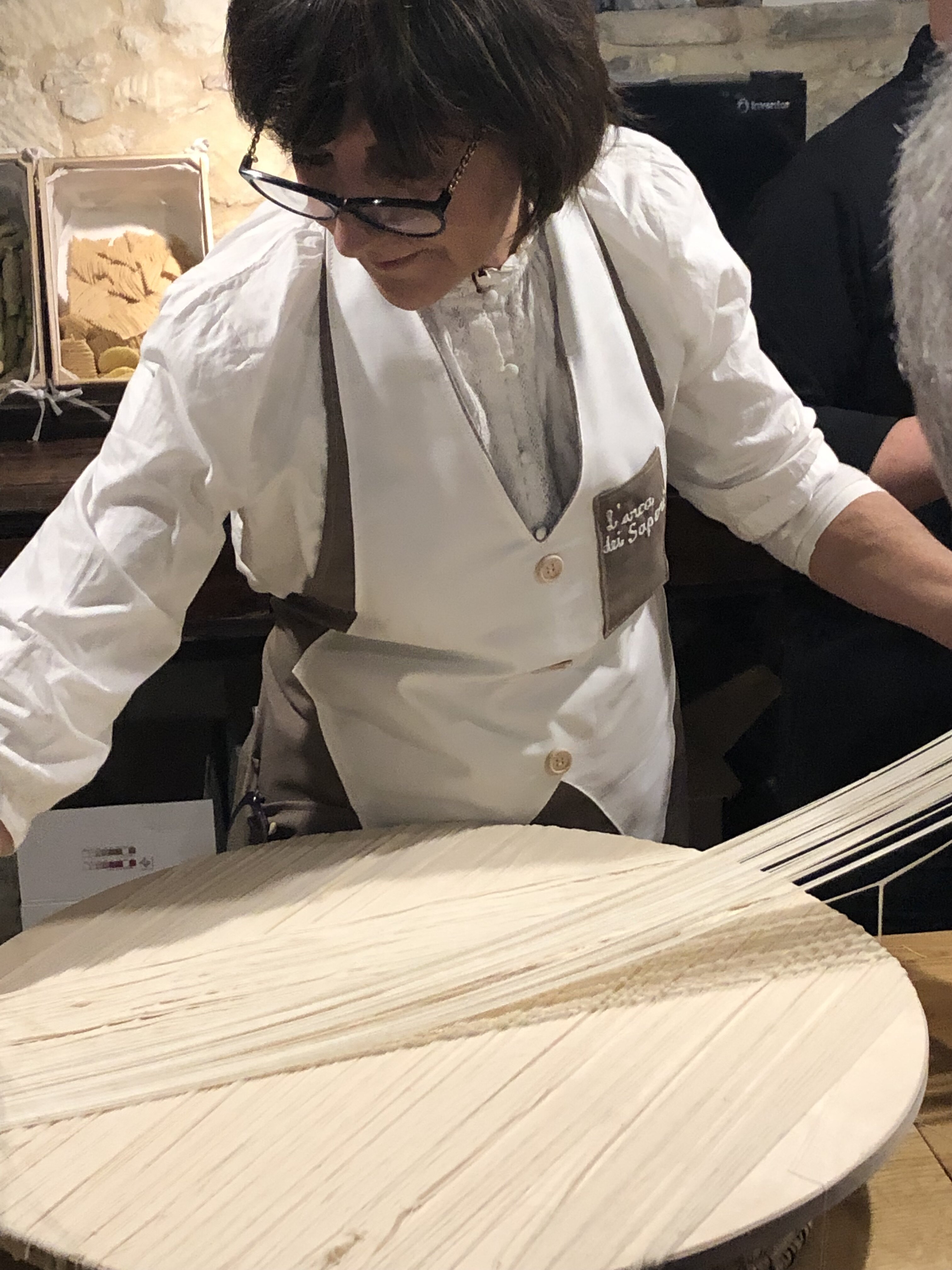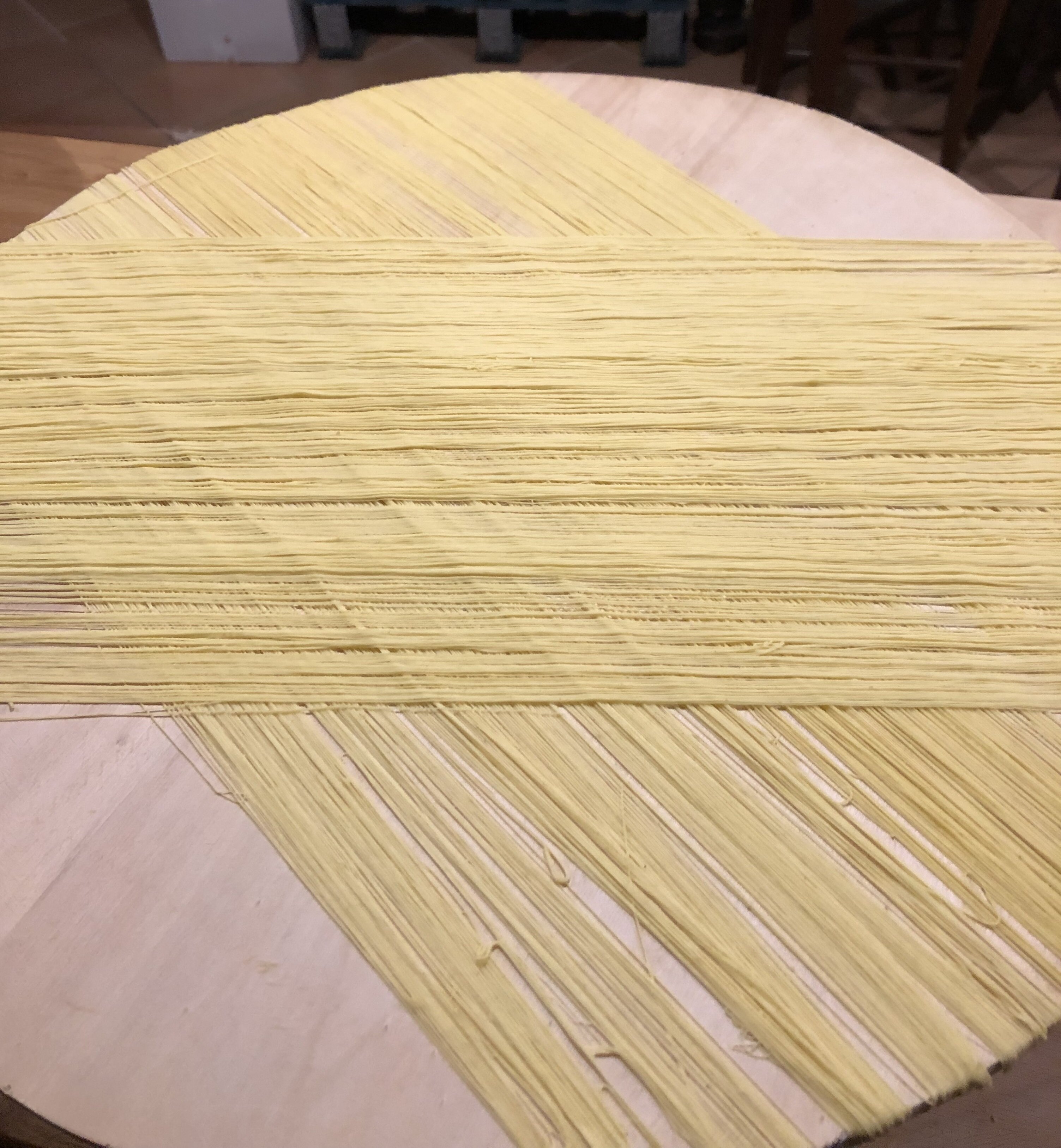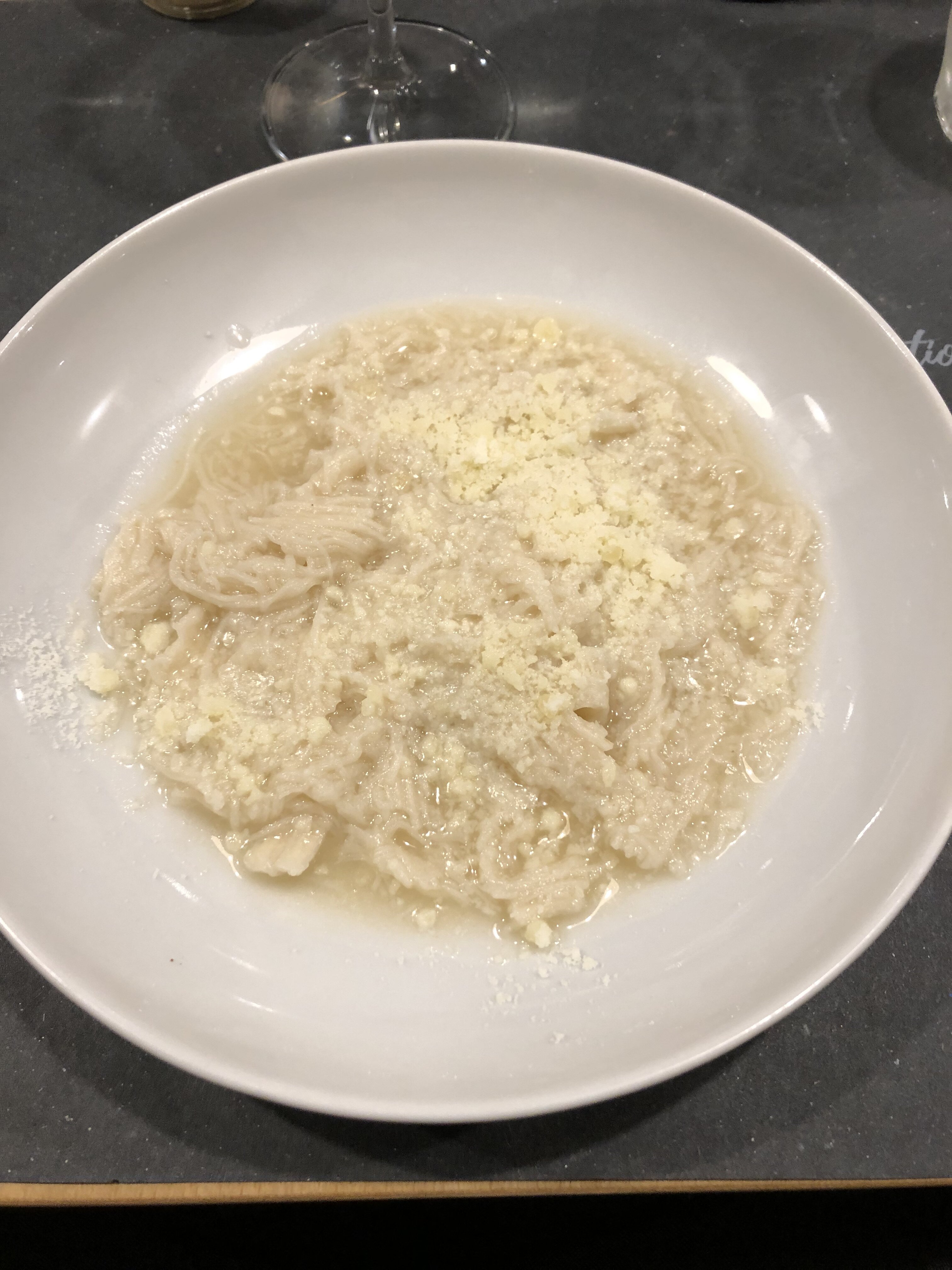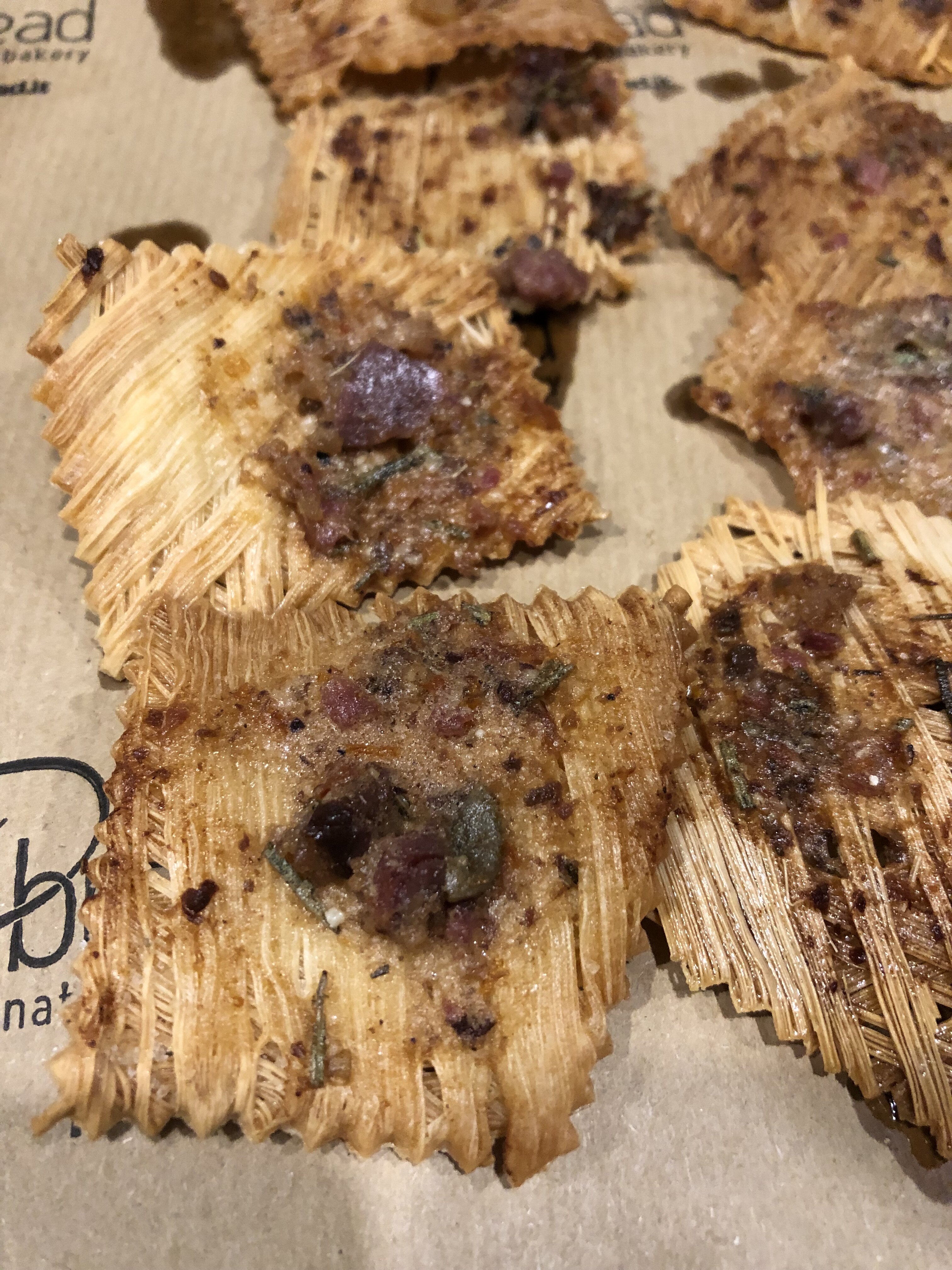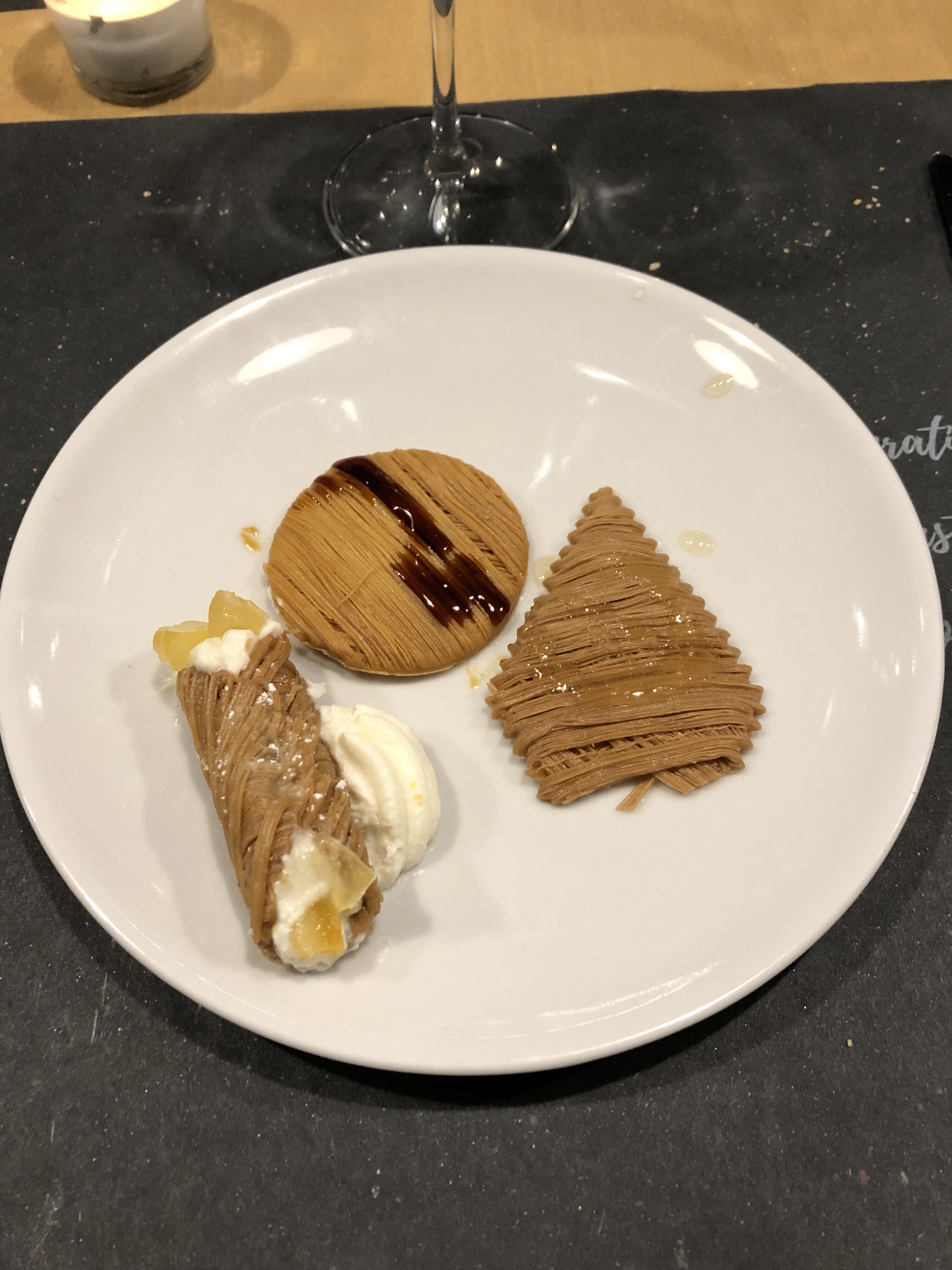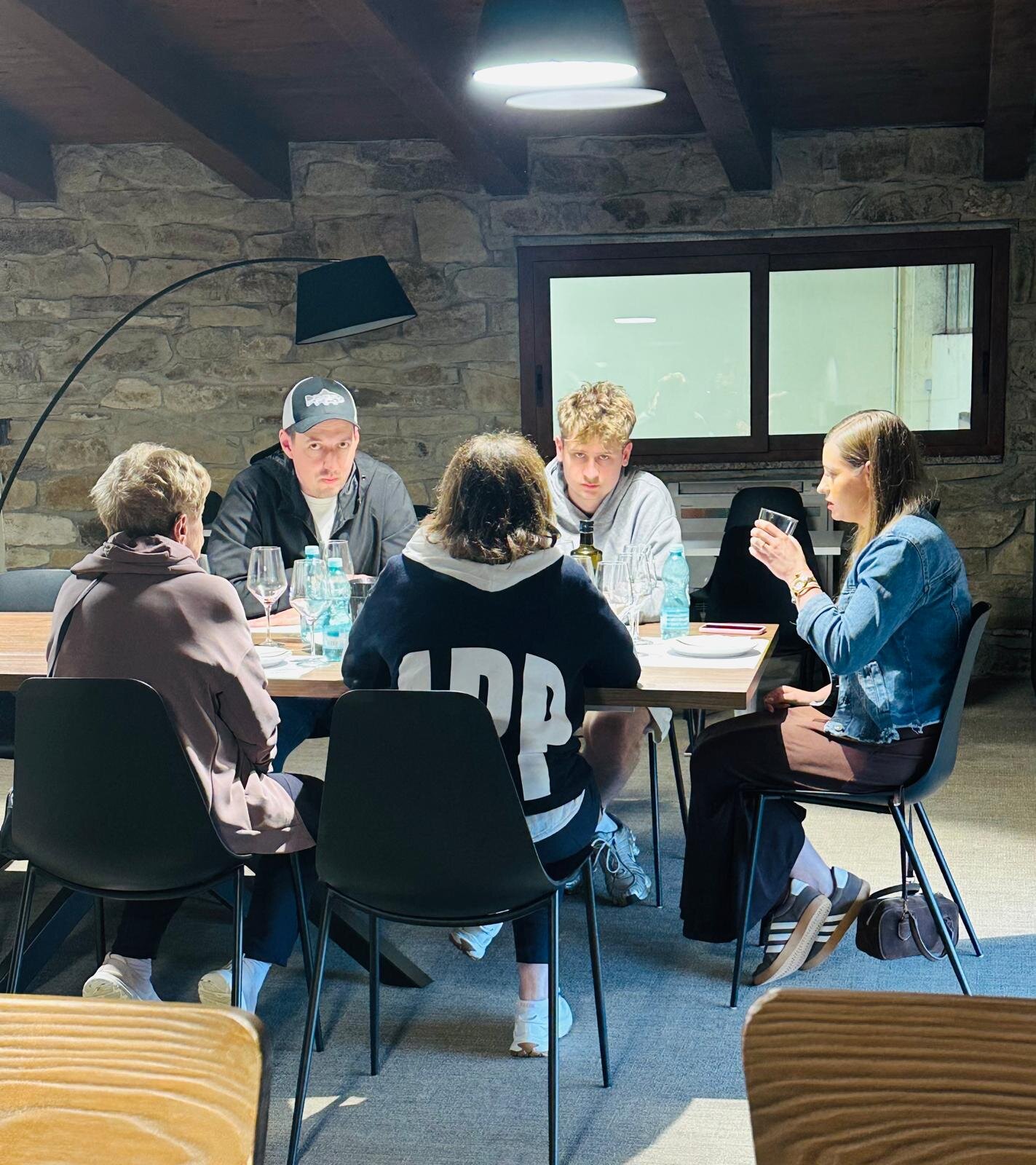
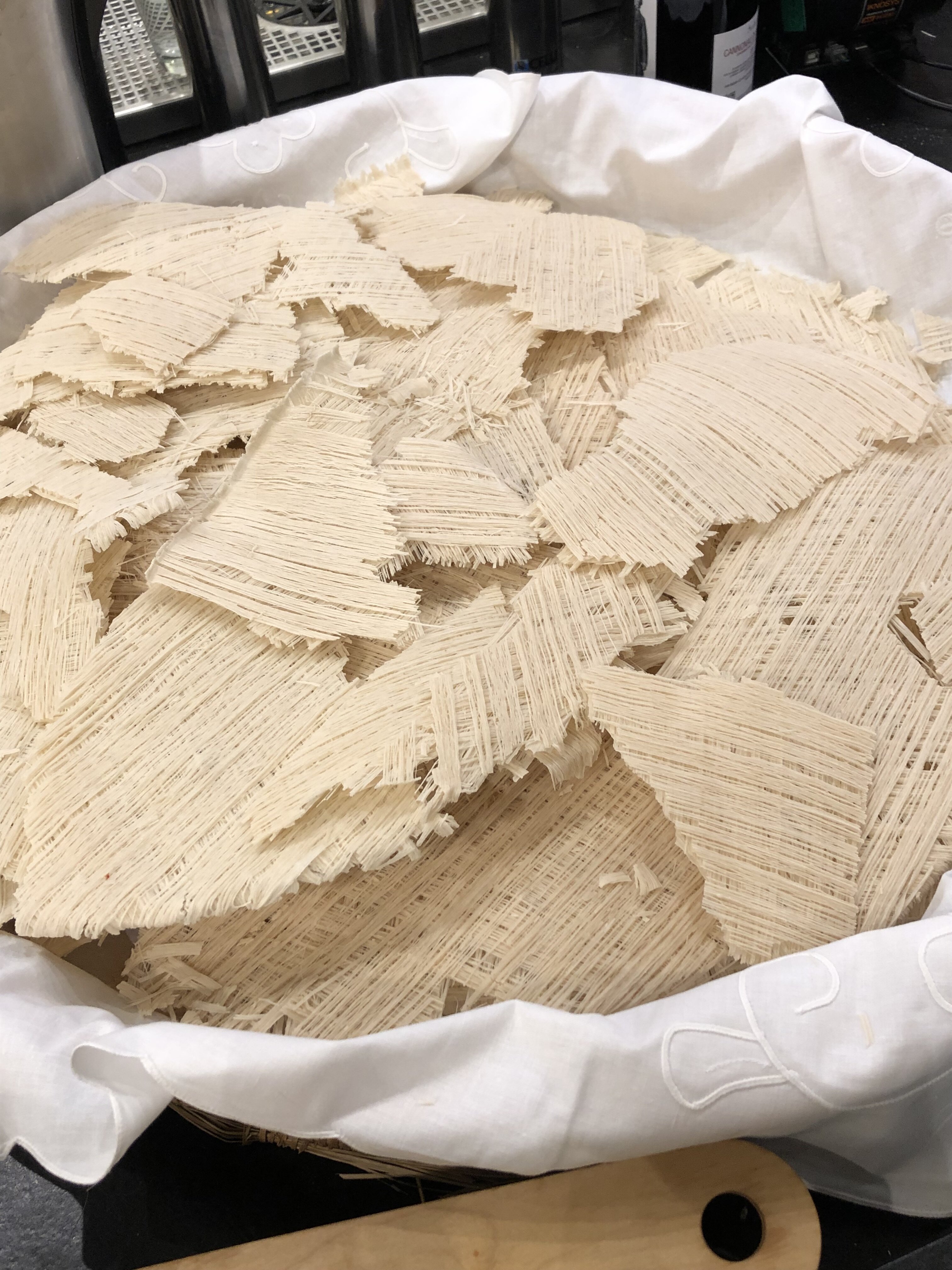
On Wednesday, April 10th, on the occasion of the Festa de su Filindeu, a public event organized by Stefano Pibi, owner of Pbread Natural Bakery in Cagliari, I was able to witness, together with the many guests present, a small miracle, namely the production of the so-called Threads of God. These are extremely thin threads of pasta made from a dough of durum wheat semolina, water, and salt, which are then layered in 3 layers to form a sort of circle that, once naturally dried for a few hours, almost takes on the appearance of a very fine cotton artifact, made with a manual loom. With 200 g of dough, skillfully stretched 8 times, following its elasticity, you get 256 threads. Once dried, the pasta can be broken into irregular pieces and cooked in mutton broth, as the traditional recipe requires. Su Filindeu is a Slow Food presidium of Sardinia, which in the atlas of Italian regional products is defined as follows: “Literally veil of God, it is a pasta made from durum wheat semolina and water, from which extremely thin threads are obtained, similar to hair, arranged to dry in three overlapping and intertwined layers to achieve the effect of a very fine gauze. They are made in the Nuoro area on the occasion of the festival of San Francesco di Lula, in early May: the soup prepared with mutton broth, sour cheese, and broken filindeu is the meal of the pilgrims who arrive at the sanctuary for the celebrations. Given the strong symbolic link with this religious event, in popular culture it is considered a pasta with miraculous powers, to the point that refusing it would be considered an affront.” The traditional dough does not include the addition of any other ingredients besides those mentioned above, but yesterday we were able to witness the making of the same dough with the addition of saffron, spinach, or in a sweet version with the addition of sugar. The result is the creation of very thin and colorful threads, which, when layered, amplify the artistic effect of this food artifact. There are now very few “artists” left who can produce this miracle, perhaps only about ten in all of Sardinia. Among them Gianfranca Dettori of “Semplicemente pane”, based in Sennori, in the province of Sassari, a master in the art of making su filindeu, decorated Sardinian sweets, festive bread, and other specialties; and Anna Rita Fadda owner of “L’arca dei sapori”, located inside the Borgo del Pane of Settimo San Pietro, a master in the making of traditional sweets, sourdough bread, and festive bread. At the end of the workshop, during which many tried to emulate the gestures of the two masters, experiencing firsthand the difficulty if not the impossibility of obtaining those 256 very thin threads, we had the pleasure of tasting specialties based on filindeu. The first course was a reinterpretation of the traditional recipe of su filindeu served with mutton broth and sour cheese. We tasted it with a vegetable broth and lots of grated cheese on top. A lighter version in terms of calories but not in terms of taste. The tasting continued with a savory, modern, and innovative version of su filindeu, which becomes an original idea for an aperitif. The pasta was in fact cut before drying into small squares that were then baked to acquire crunchiness and then seasoned with a pesto made by mixing lard, Selargius capers, and dried tomato. An explosion of flavor. The evening ended with a surprising course: dessert. Yes, su filindeu can also be used to make fantastic desserts. Perhaps the most traditionalists will turn up their noses, claiming that tradition does not include a sweet version of su filindeu, but I assure you that since yesterday it is officially one of my favorite desserts. Three variations were offered. In the first two cases, su filindeu was cut into a shape reminiscent of classic shortbread cookies, fried, and then topped with a drizzle of honey or abbamele (honey sapa). The result is crunchy, golden, and tasty. Last, but certainly not least in terms of flavor, was the filindeu pasta cannolo, filled with sheep ricotta and enriched with pompia zest. A true sensory experience. I would like to officially thank Stefano Pibi for giving so many of us the opportunity to see this fantastic process live, which I knew existed but until now had only been able to observe through the pages of magazines or traditional recipe books. I can say with certainty that I had a pleasant experience that definitely enriched my cultural and food and wine knowledge and delighted my taste buds.