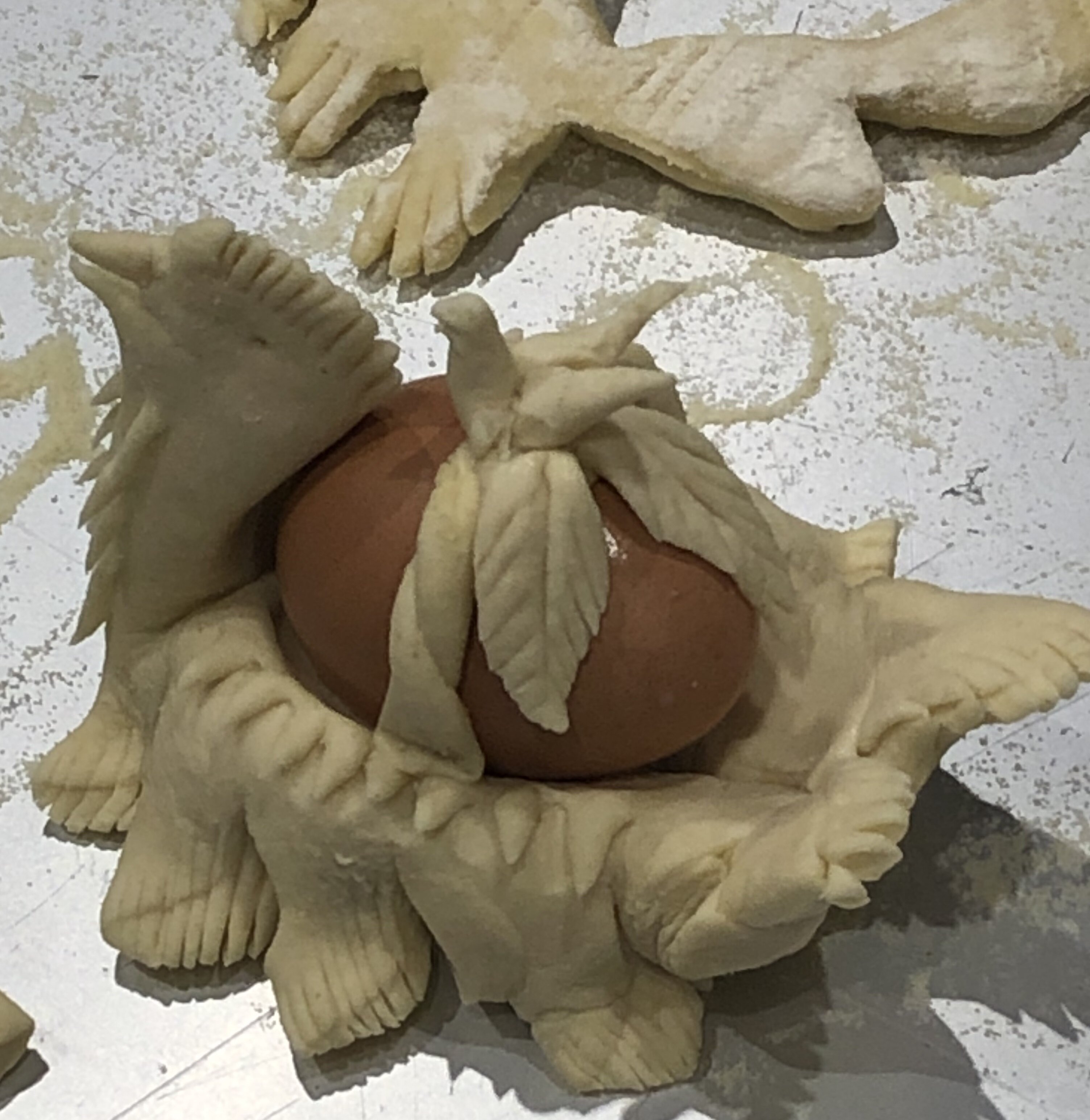
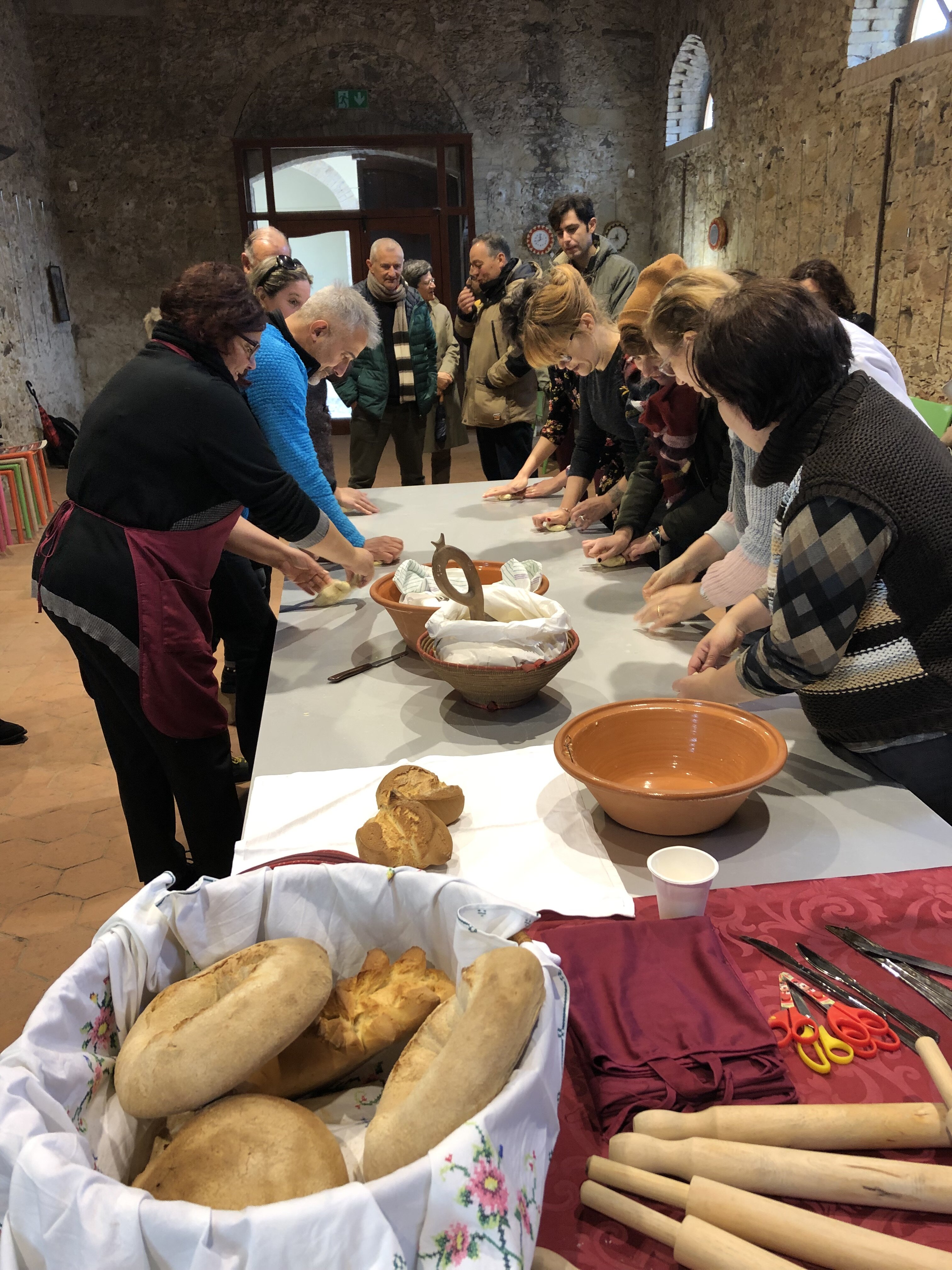
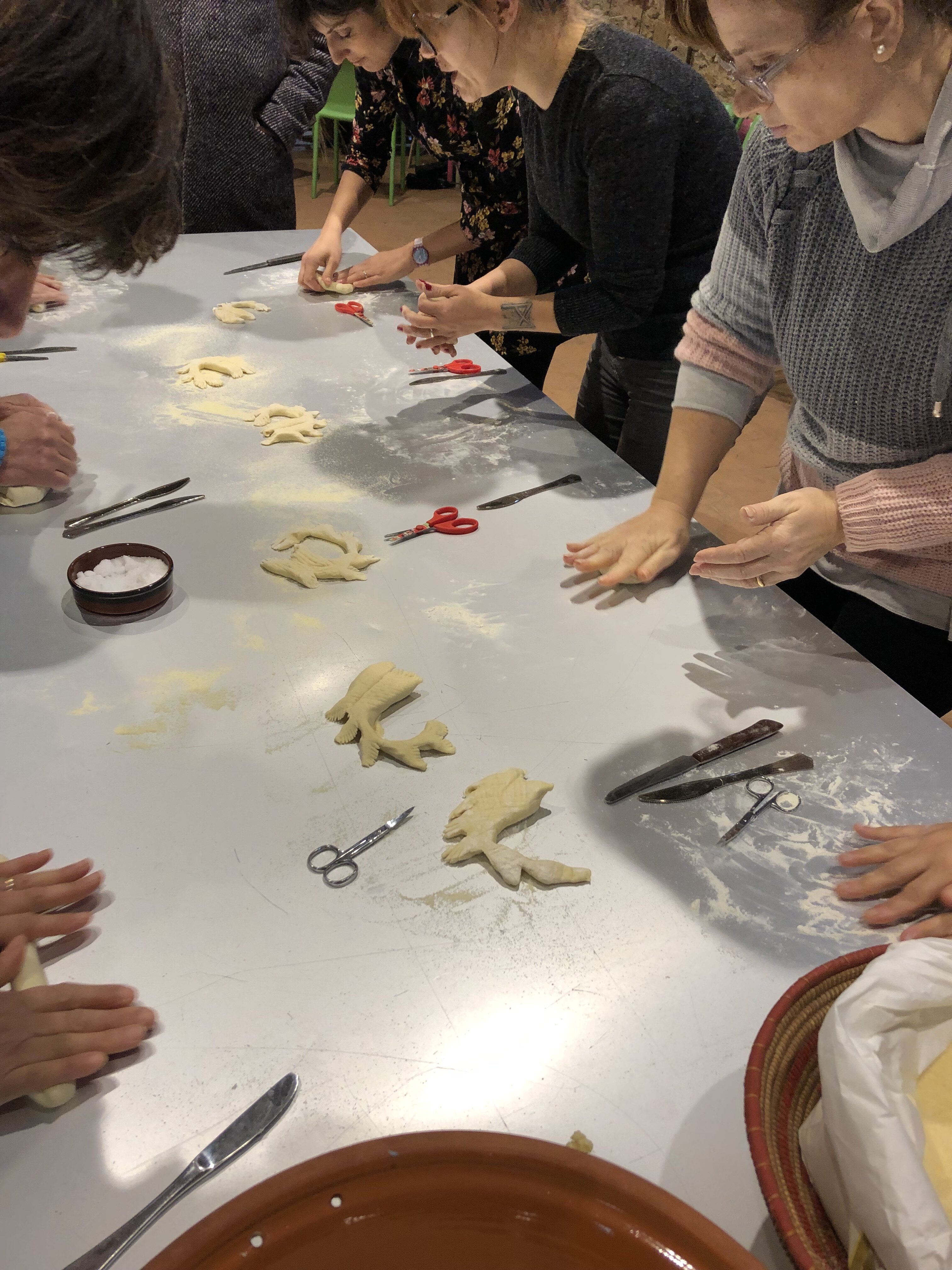
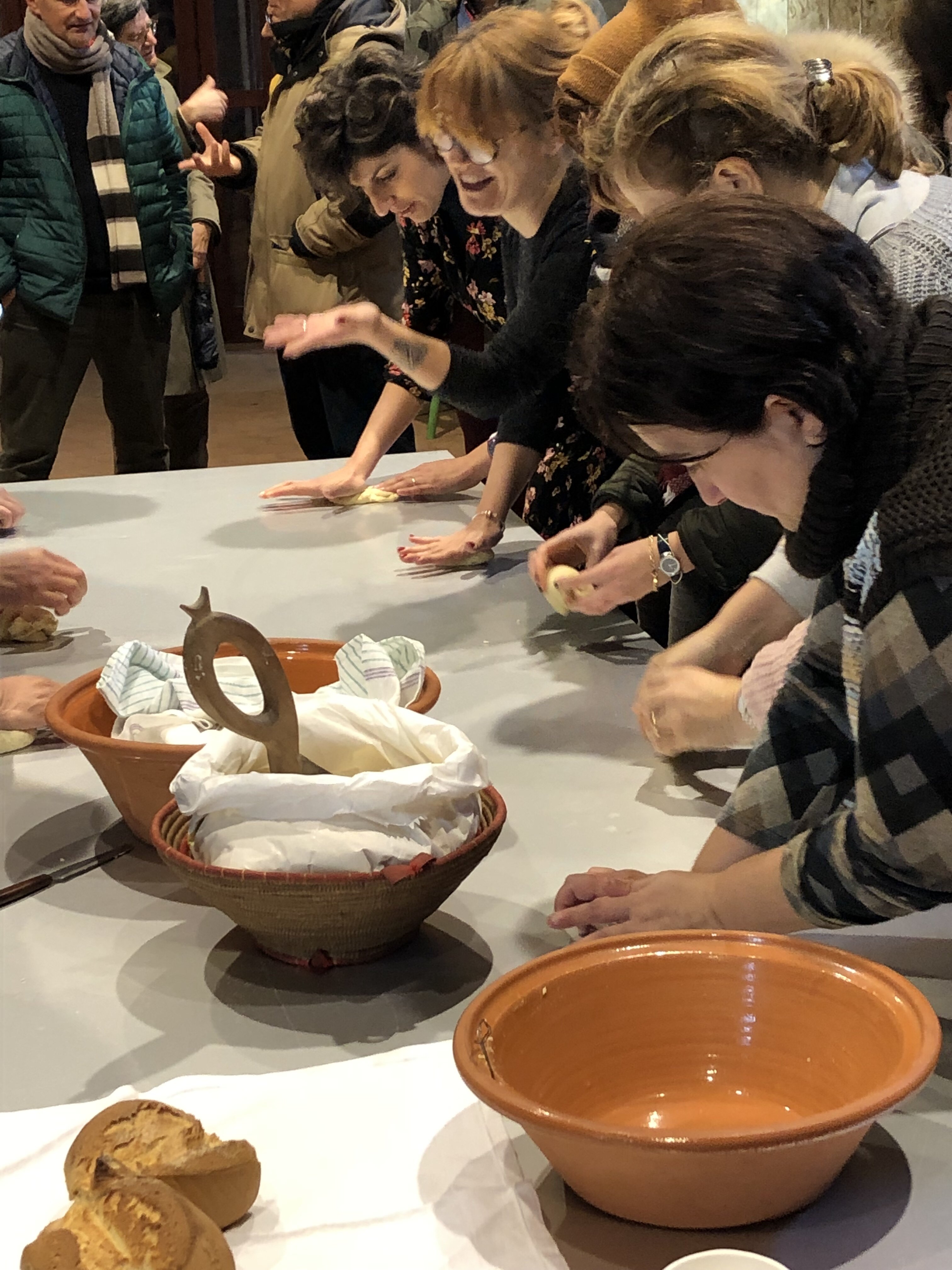
On Thursday, January 24, the historic building of Casa Dessì, in Settimo San Pietro, was the headquarters of the third meeting of Le vie del Pane, a project curated and developed by Laore, the regional agency for agricultural development, aimed at promoting bread and products from the Sardinian territory. The ancient and evocative Casa Dessì, which still bears the name of the family that owned it, stands on the main street of the town and is considered a symbol of ancient architecture in Settimo. The building preserves some of the typical elements of the Campidanese houses, a large portal and the characteristic lolla, a long arched porch onto which the rooms where family life took place open. The day was structured as a journey of 3 stages, necessary to understand how the basic ingredient becomes the final product. The first stop on our journey was the Antico Molino della Famiglia Mascia, where time seems to have stopped in the 1950s, not only because of the furnishings and atmosphere, but above all for the unchanged milling techniques carried out exclusively with stone mills. With patience and effort, by milling Senatore Cappelli wheat from the Guasila area, several types of flour are obtained, including fine semolina, one of the basic ingredients needed to make Pane delle Feste. The second stop, dedicated to tasting, was the visit to Il Borgo del Pane, which hosts several workshops and shops dedicated to the production and sale of traditional breads and sweets from the metropolitan area of Cagliari. At the Borgo del Pane we had the chance to taste Moddizzosu, a typical bread from southern Sardinia made with semolina, yeast, water, and salt. The third and final stop was dedicated to the educational workshop on the production of festive bread, under the expert guidance of Anna Rita from L’arca dei sapori and Luisanna from the youth cooperative Bios, who showed us the secrets of these ancient processes. In the past, festive bread was prepared only for the wealthier classes and on special occasions such as weddings, where it was called coccoi de is sposus, or for religious holidays, such as Christmas and Easter. Having decorated bread on the table meant ensuring good luck and good omens. Fine semolina, sourdough, salt, and water are the simple ingredients to be mixed, smoothed, and shaped into a round or semicircular form with flattened ends and a central hole; the breads are decorated with incomparable artisan skill, using traditional tools such as a special pair of scissors to make is pitzus (or pizzicorrus), and a small knife, used to carve the upper surface in relief. The leavening takes place by laying the breads on cotton cloths so they can be transported without altering their shape; they will be baked without being touched again. This type of bread was characterized by the many shapes in which it was made. One example is when the coccoi was shaped like a little peacock with a cooked egg inserted in its back as decoration; or “sa sorrixedda”, a sort of butterfly with the two mirrored parts in the center, as if they were sisters. The crown shape with pitzus creating two or three levels of decoration was also a must. The next and final event of "Le vie del Pane" will take place in Cagliari on January 31.
.png "10 cibi sardi da assaggiare assolutamente a Cagliari")
.png "10 Sardinian Foods You Must Try in Cagliari")
.jpeg "San Benedetto Market Cagliari: The Complete Guide to Sardinia's Most Authentic Food Experience (2026)")