Le strade del gusto
Sardinia told through its flavors.
Authentic food and wine experiences to discover the wine, oil, cheeses, craft beer, fresh pasta and the traditions of Sardinia.
Made with ❤️ in Sardinia
Le strade del gusto - P. Iva 03790590925 - @All Right Reserved 2026
Pasta
Traditional Sardinian pasta is an authentic expression of Sardinia's gastronomic culture, where craftsmanship, simplicity, and quality ingredients blend in recipes passed down through generations. Made primarily with local durum wheat semolina and water, it is born from ancient techniques that transform a few ingredients into shapes rich in identity.
Enjoyed with rich meat sauces, fish, or simply with tomato and pecorino cheese, Sardinian pasta is a journey through the island's authentic flavors: authentic, intense, and deeply rooted in the land.
Culurgiones
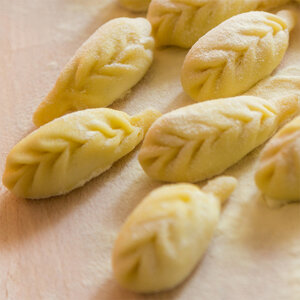
They are the typical ravioli of Ogliastra, although they are eaten throughout Sardinia. The pasta is made by mixing durum wheat semolina and eggs, while the filling consists of potatoes and cheese. They are made and closed by hand, and this operation requires a certain skill. They can be eaten with rich meat ragù, with a simple sauce made from fresh tomatoes, or simply with a bit of butter and sage.
Recognized as PGI in 2018, they represent the excellence of the Sardinian tradition.
Filindeu
This is a pasta made by mixing durum wheat semolina with water. Very thin threads similar to hair are then formed, which are layered in three layers, almost forming a gauze. Once dried, they are broken and cooked in soup prepared with sheep broth and cheese. It is typical of the Nuoro area.
Fregula
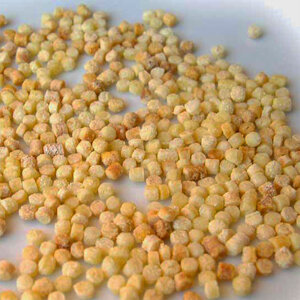
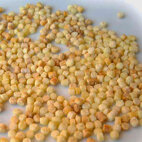
This type of pasta resembles couscous as it is made up of small irregular spheres obtained by rubbing coarse semolina on the side of an earthenware container (sa scivedda). It is often served in a brothy form or drier. Usually seasoned with tomato and clams.
Lorighittas
The preparation of this type of pasta requires good manual skill. Lorighittas are made from spaghetti that are twisted on themselves into a cord and then closed into a ring. They are typical of Morgongiori, a town in the province of Oristano. They were traditionally made for All Saints' Day. Today, they are made and eaten all year round.
Malloreddus
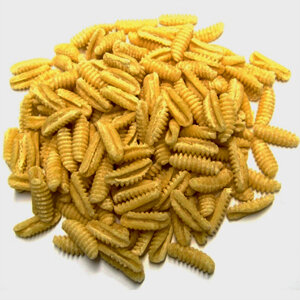
They are also known as Sardinian gnocchetti and are made from durum wheat semolina and wheat flour. They are widespread throughout Sardinia but originate from Campidano, where they are served with a ragù made from fresh sausage, a bit of grated pecorino, and a pinch of saffron.